Green roof
Planting and substrate provide a living landscape and retain some rainfall. Retention varies with conditions and does not automatically deliver a specified discharge rate.
Explore green roofs
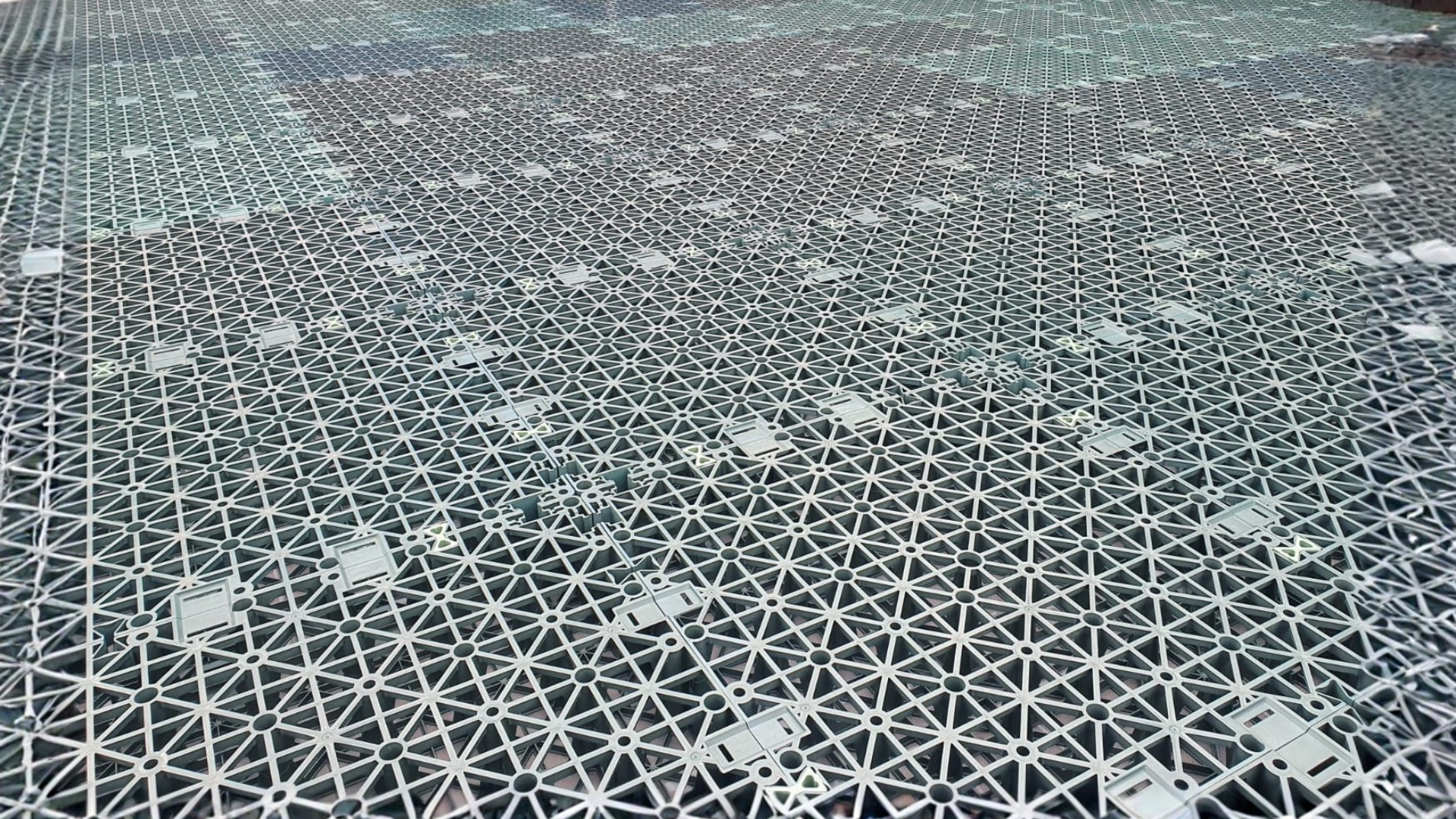
Designed rainwater storage. Controlled release.
Stormwater management
A blue roof temporarily stores rainwater at roof or podium level and releases it at a designed rate. It can form part of a sustainable drainage system (SuDS), helping manage runoff at source rather than sending all rainfall straight into the drainage network.
Rainwater enters a designed storage zone. Flow-control outlets limit discharge while the storage volume accommodates the design rainfall event. Storage depth and release times are calculated for the project, not fixed for every roof.
Waterproofing, structure, storage components, outlets and overflow provisions must work together. A blue roof is engineered attenuation, not simply a roof with a blocked drain.
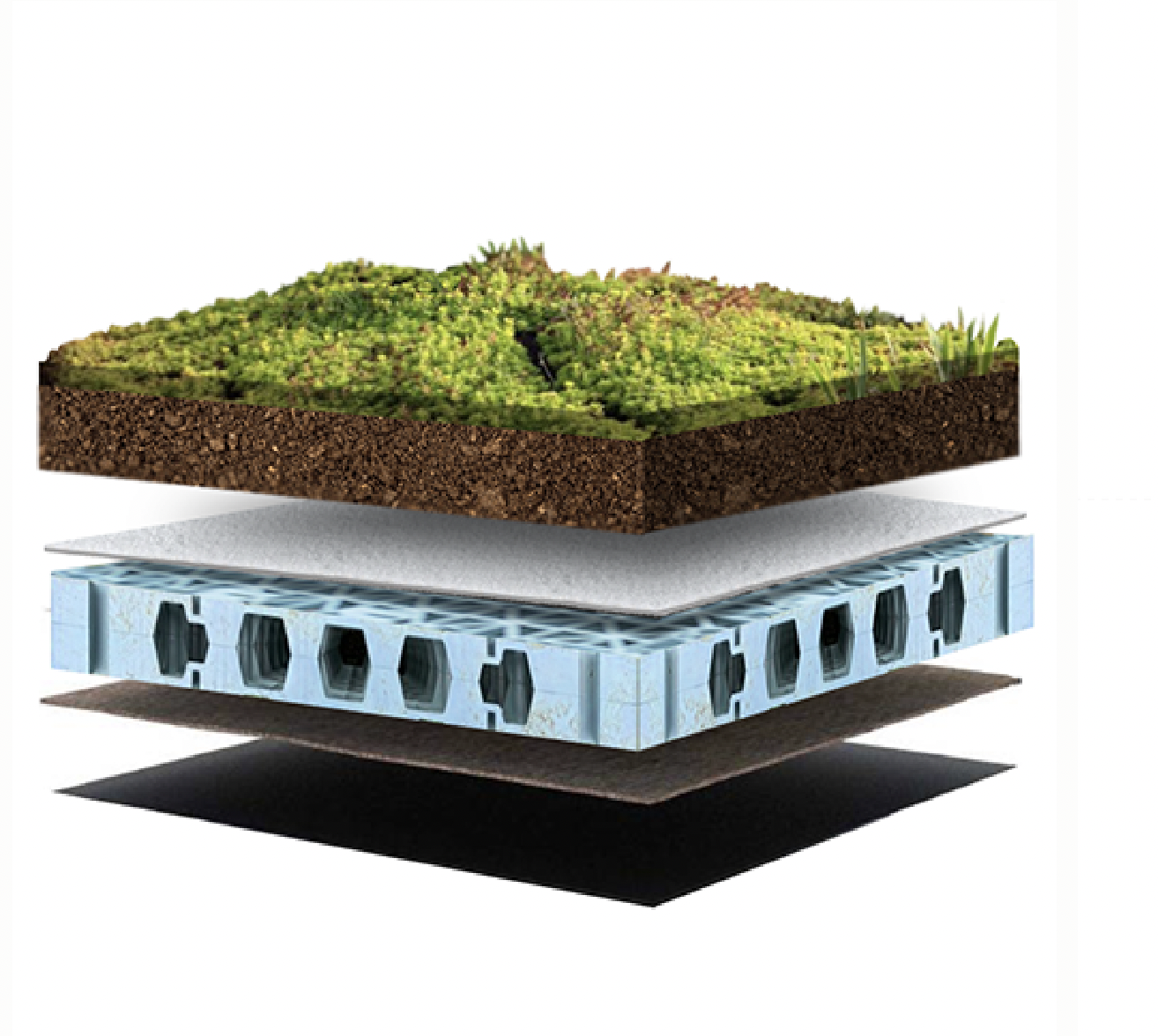
One roof, complementary functions
Planting and substrate provide a living landscape and retain some rainfall. Retention varies with conditions and does not automatically deliver a specified discharge rate.
Explore green roofsA designed storage zone manages water quantity and controlled release. It can be integrated with suitable roof finishes without necessarily including vegetation.
Combines a planted roof with engineered attenuation. The planting and water-storage functions are coordinated, including drainage, loading and maintenance access.
Early design coordination
Confirm the permitted discharge rate, required storage, rainfall design criteria and the wider site drainage strategy with the project’s drainage designer.
Include stored water, the saturated roof build-up and all other relevant loads. Water storage cannot be added without checking the capacity of the roof or podium.
Select compatible waterproofing and coordinate outlets, penetrations, upstands and inspection access for the intended storage arrangement.
Provide an appropriate route for water when the design capacity is exceeded or an outlet is obstructed. This is part of the drainage strategy, not an optional extra.
Keep flow controls and outlets accessible. Inspection and clearance help the system continue to discharge as designed throughout its life.
From design to aftercare
Our portfolio includes blue roof installation and coordinated blue, green and brown roof schemes. We can discuss design, supply, installation and ongoing support alongside your wider project team.
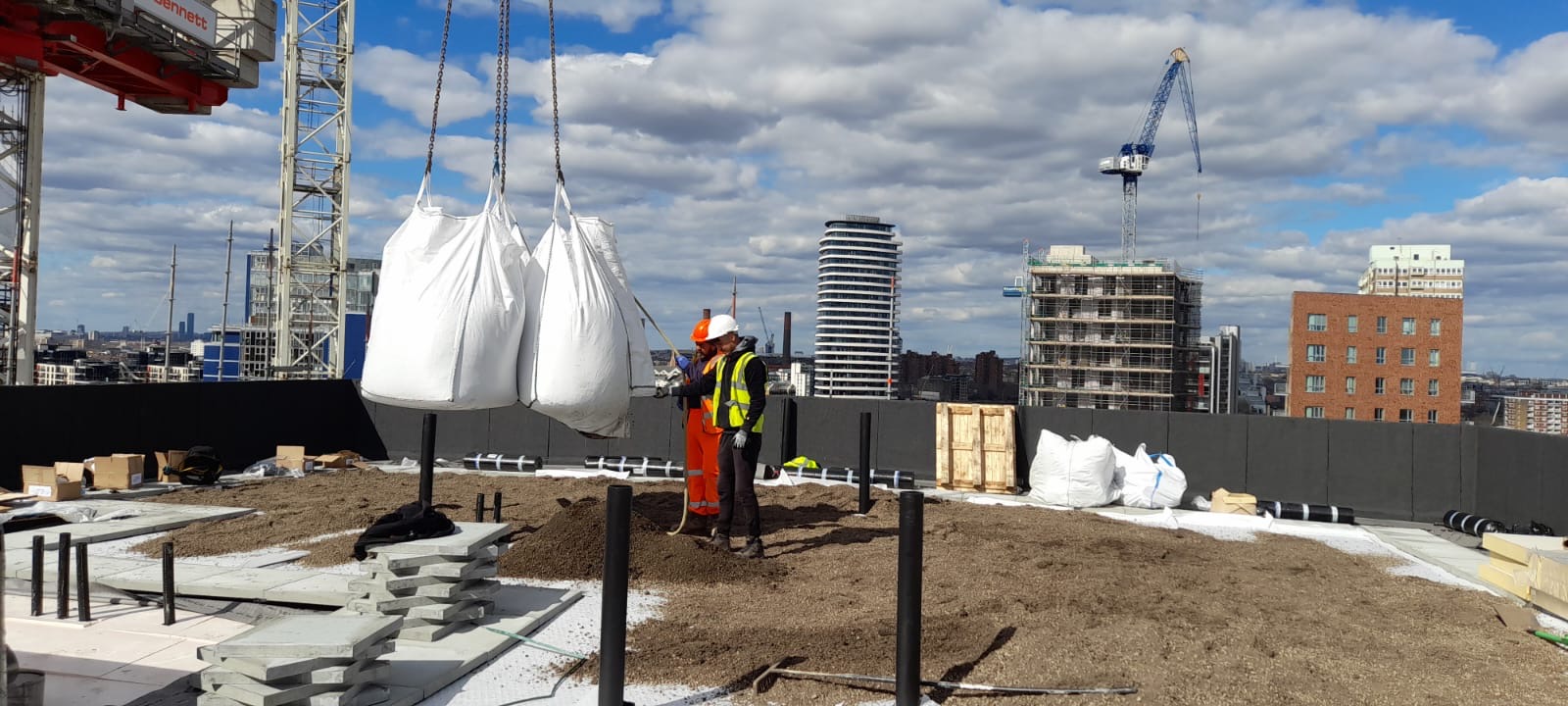
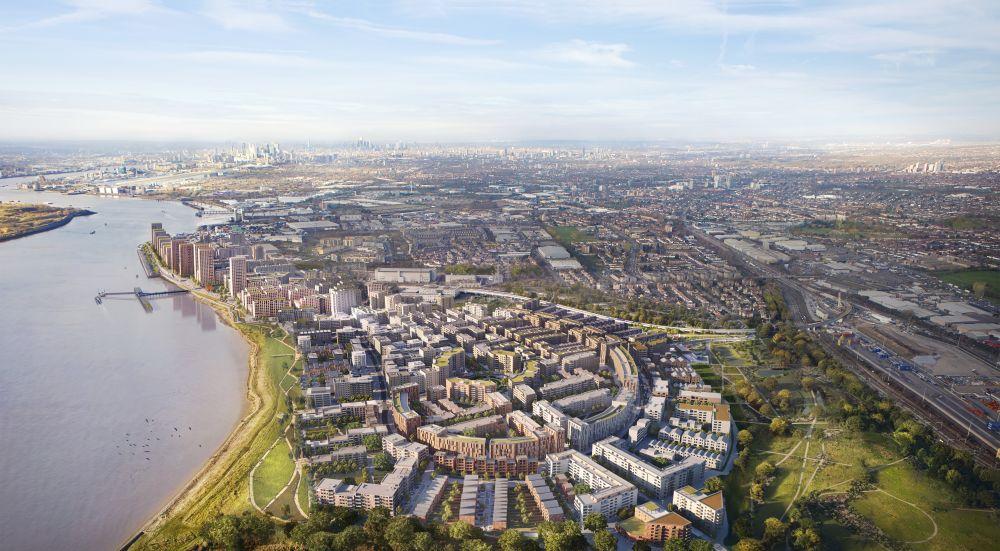
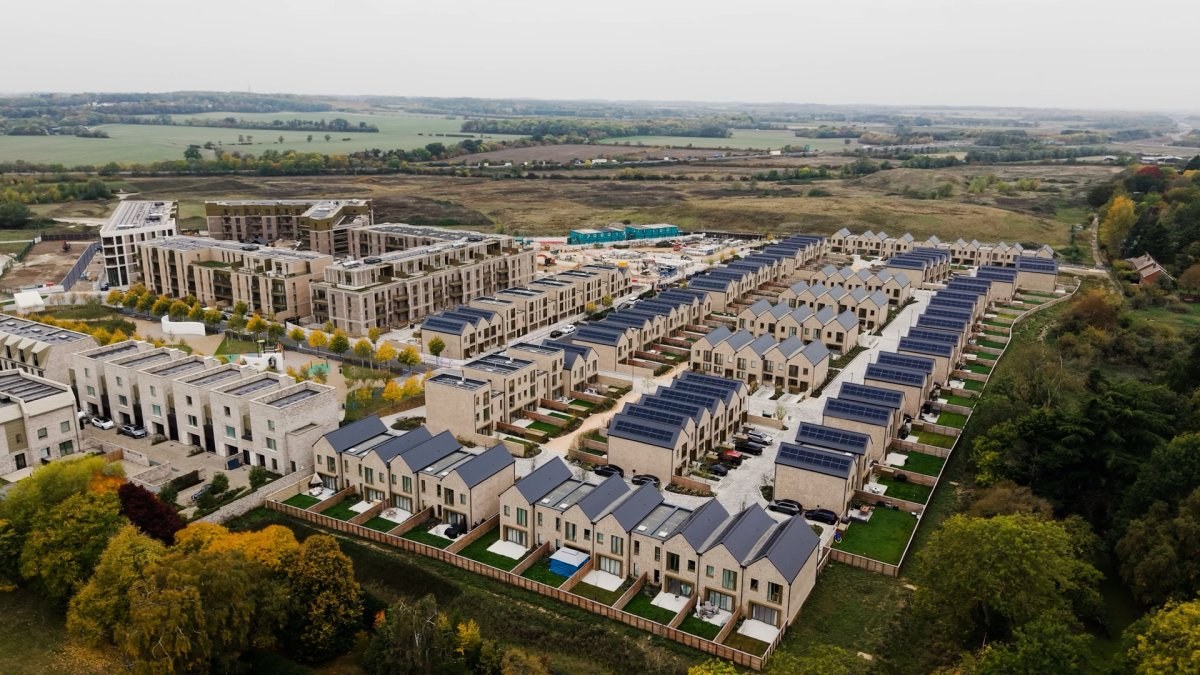
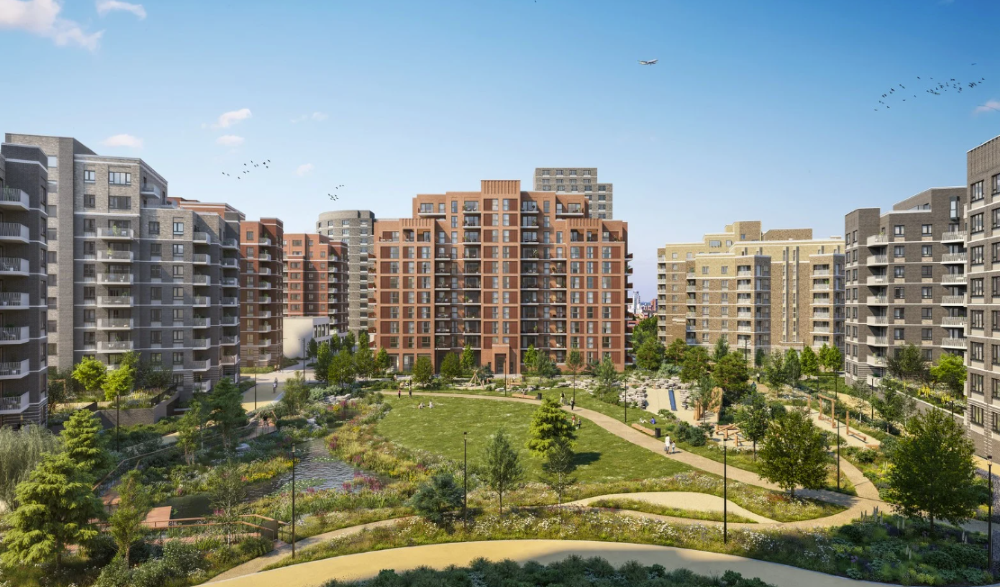
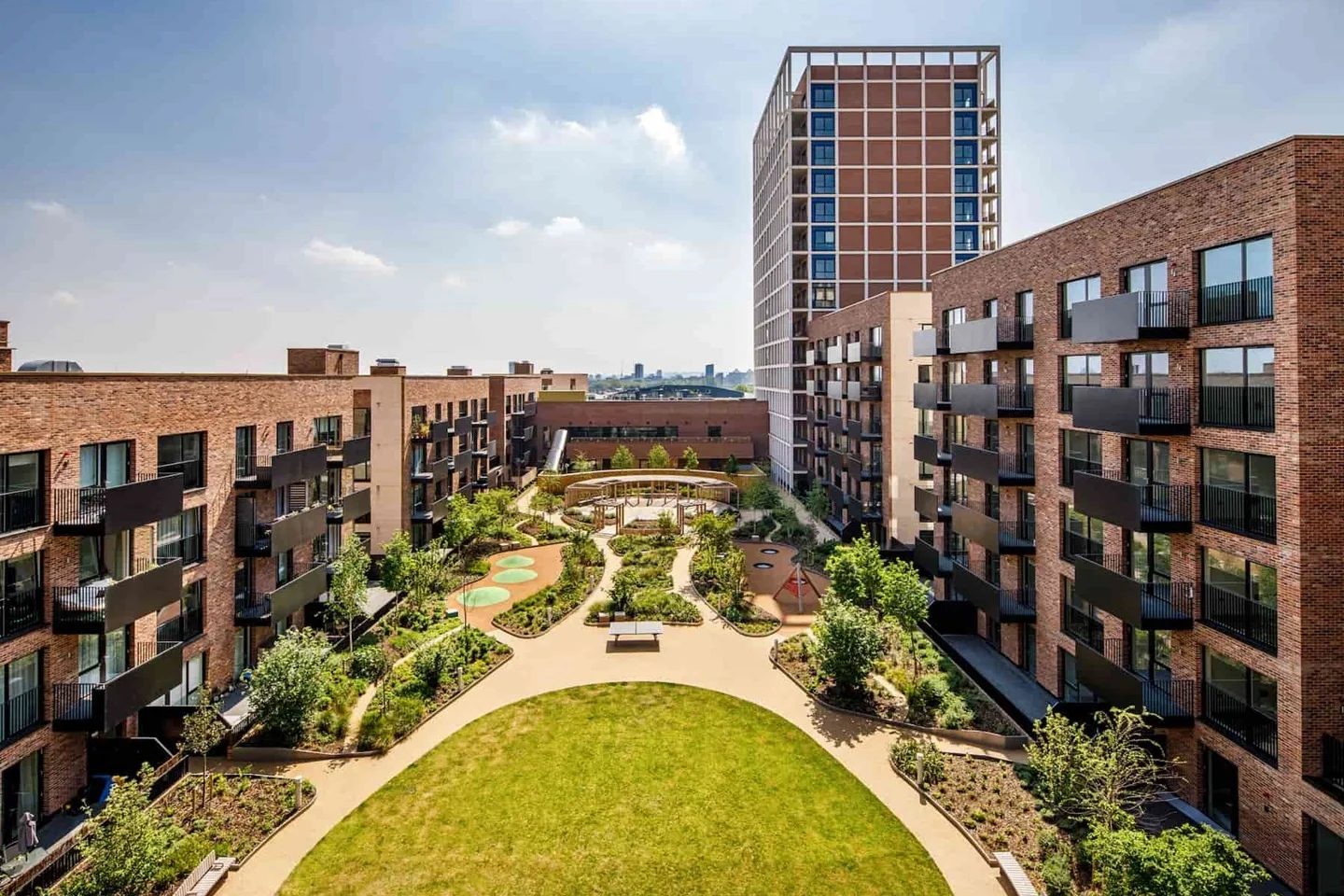
From our project portfolio
Practical answers
No system can guarantee that. A blue roof manages runoff for defined design conditions as part of the wider drainage strategy; safe overflow and exceedance arrangements remain essential.
Not necessarily. Attenuation systems are designed to store rainfall temporarily and release it at a controlled rate. The storage and discharge behaviour depend on the specified system.
Possibly, but the additional water load, waterproofing suitability, drainage and available detailing heights need assessment. It is not a universal retrofit solution.
It can be integrated with suitable finishes and solar arrangements where designed for them. Access, loading, drainage paths and compatibility need to be coordinated.
Not automatically. A green roof’s rainfall retention and a blue roof’s calculated attenuation are different. The drainage designer determines whether additional storage is required.
Technical reference
The NFRC Blue Roof Technical Guidance explains design principles for roof-level attenuation. Your project team should confirm the applicable current requirements and design criteria.
Your next step
Tell us the project location, approximate roof area, whether it is a new or existing roof, and what you want it to achieve. Drawings and your current project stage help us give more relevant guidance.
Discuss your roof with our team